
A single agent juggling three active listings has a manageable staging problem. A team running 40 listings a month has an operational one. Traditional staging — coordinating movers, rental furniture, stylists, and photographers — doesn't scale. By the time a unit is staged and shot, the listing window has already narrowed.
AI virtual staging breaks that constraint entirely. The most productive real estate teams have figured this out, and they've built it into their standard listing workflow. Here's how they do it — and what any team can take away.
The Bottleneck That Kills Team Momentum
For individual agents, staging delays are a frustration. For teams, they compound into a competitive liability. When your pipeline includes vacant condos, inherited properties, investor flips, and relocation sales all at once, waiting days for a physical staging appointment means days of carrying costs, reduced showing urgency, and stale listing photos hitting the market.
The teams winning on volume don't have more patience — they've removed the bottleneck. As soon as listing photos are taken, they're uploaded into AI staging tools like Stagerify, and styled renders are back within minutes. The listing goes live staged, not promised-to-be-staged-next-week.
One Workflow, Any Property Type
What makes AI staging powerful at scale isn't just speed — it's consistency across wildly different property types. A high-volume team might handle a Victorian townhouse, a downtown studio, and a suburban family home in the same week. Physical staging requires sourcing completely different furniture sets for each. AI staging uses the same upload-and-select workflow regardless of room type or architectural style.
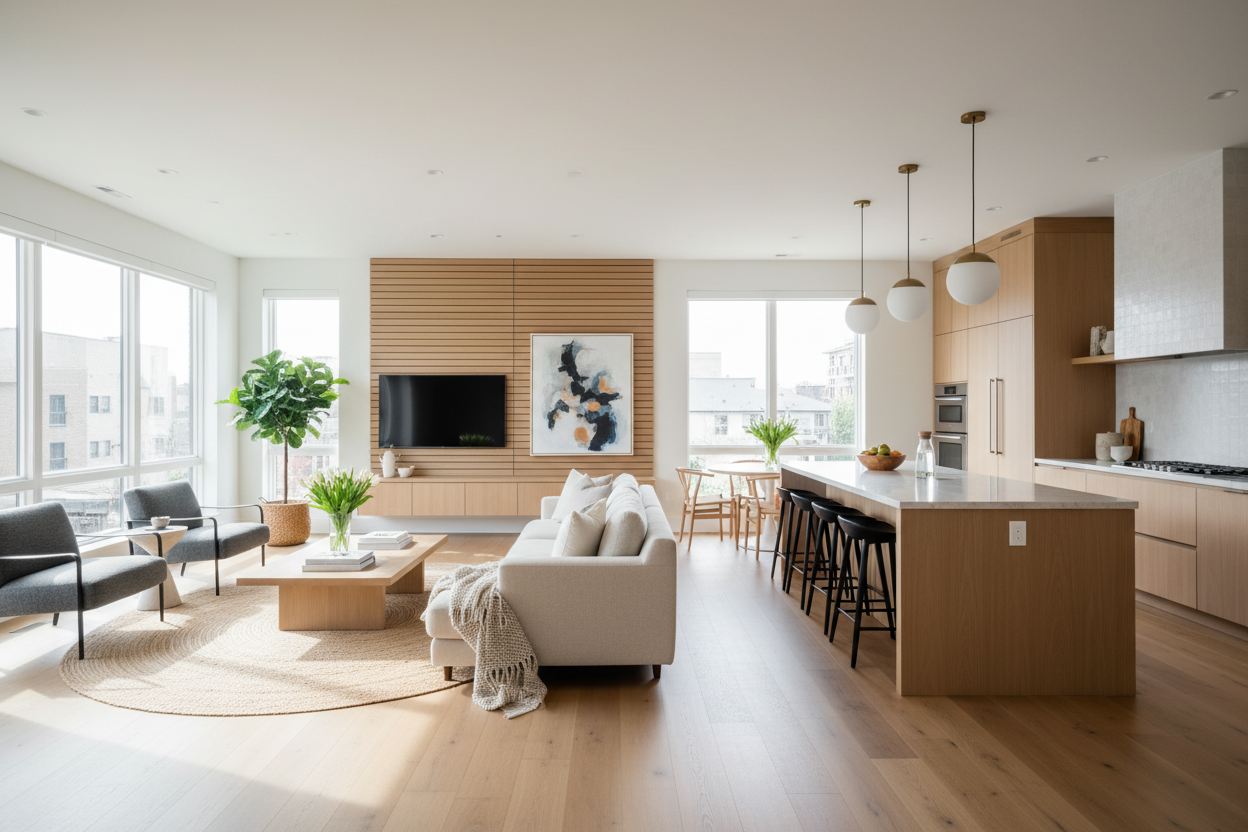
Teams using Stagerify set a style once per listing — modern, Scandinavian, transitional, coastal — and generate photorealistic rooms across every shootable space in a single session. The result is a visually coherent set of listing photos that looks intentional, not improvised.
How Smart Teams Divide the Work
The most efficient teams don't leave staging as an afterthought for individual agents. They treat it like any other operational step:
- Designated staging coordinator — one person owns the upload and output review for every new listing, ensuring quality control across the team
- Style guide by market segment — teams pre-select approved staging styles for entry-level, mid-market, and luxury listings so agents aren't making design decisions under deadline pressure
- Parallel turnaround — photography, furniture removal, and AI staging happen in the same 24-hour window instead of sequentially, so listings go live faster
- Before/after asset library — staged images and originals are stored and reused in marketing, social content, and listing presentations to build brand consistency over time
The Cost Math at Team Scale
Physical staging for a single vacant property typically runs $1,500–$4,000 for a four-week rental. For a team doing 40 listings a year, that's $60,000–$160,000 in annual staging costs — before you account for scheduling delays or properties that need restaging. AI virtual staging at scale costs a fraction of that. At Stagerify's pricing, high-volume teams stage dozens of rooms for what a single physical staging appointment would cost.
The ROI isn't just in cost savings. Staged listings generate more showing requests, spend fewer days on market, and close closer to asking price. When you're running a team, those margins multiply fast.
What Buyers Experience on the Other Side
Buyers browsing at volume — scrolling through 30 listings on a Saturday afternoon — don't stop to think about whether a room was physically staged or AI-staged. They respond to the same cues: good light, proportional furniture, a color palette that reads warm and livable. What they're unconsciously asking is can I picture myself here?
AI-staged rooms from Stagerify answer that question as effectively as physical staging — and in some cases better, because the AI doesn't get fatigued by tight spaces or awkward layouts. It finds the most flattering version of every room and renders it in a style calibrated to your target buyer.
For teams that want to compete on listing quality without burning budget on logistics, that's the advantage. Fast, consistent, scalable staging that makes every property look like it was worth the effort — because now, it is.