
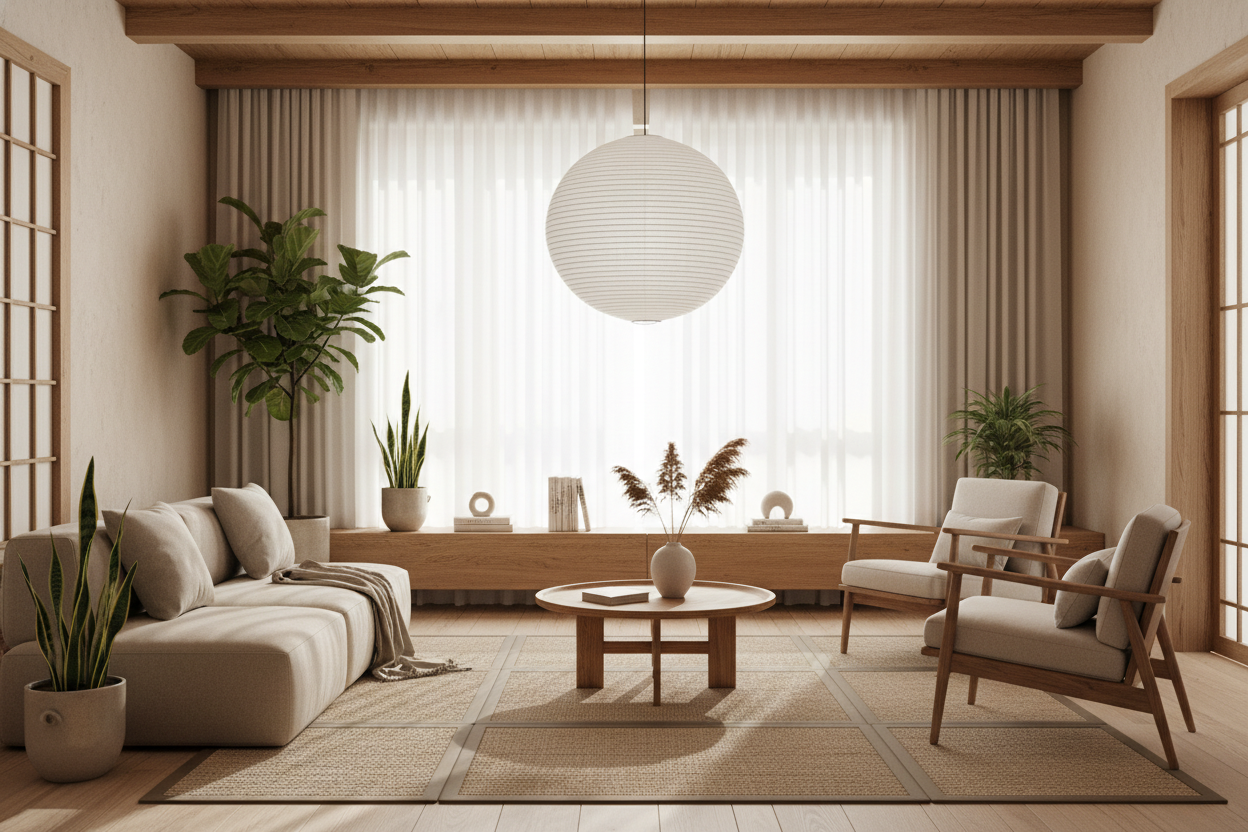
Buyers scroll listings at lightning speed. A cluttered room gets a half-second glance. A clean, warm, beautifully balanced space stops the scroll. That stopping power is what Japandi delivers — and it's why this style has quietly become one of the most effective tools in a real estate agent's arsenal.
What Is Japandi?
Japandi is a fusion of Japanese and Scandinavian design philosophies. On the surface it looks simple: natural wood, neutral palettes, clean lines, almost nothing on the surfaces. But the effect is anything but empty. The Japanese principle of wabi-sabi — finding beauty in imperfection and simplicity — meets the Scandinavian concept of hygge — cozy, functional warmth. The result is a space that feels intentional, peaceful, and liveable all at once.
In practice, Japandi rooms feature low-profile furniture, warm earthy tones (think sand, stone, terracotta, charcoal), organic textures like linen and jute, a handful of carefully chosen plants, and almost zero visual clutter.
Why Buyers Respond to It
Staging psychology is straightforward: buyers need to picture themselves living in a space. Cluttered or overly personalized rooms block that mental projection. Japandi solves this elegantly. The restrained palette is neutral enough to feel like a blank canvas, but warm enough to feel genuinely welcoming — not cold and sterile like some ultra-modern approaches.
Research consistently shows that listings staged in calm, minimal styles generate more saves, more showings, and stronger emotional attachment from buyers. Japandi ticks every one of those boxes. It photographs exceptionally well, too — the low-contrast warmth reads beautifully on screens, which is where most buying decisions now begin.
The Core Elements of a Japandi Staged Room
- Wood tones: Light ash, walnut, or bamboo — never dark and heavy, never painted. Exposed grain is the point.
- Neutral palette: Warm whites, soft beiges, warm grays, muted sage or terracotta as accents. Nothing loud.
- Low furniture: Sofas and beds closer to the floor feel grounded and calm — a signature Japanese design move.
- Natural textiles: Linen throw pillows, cotton knit blankets, jute or wool rugs. Texture replaces color as the source of visual interest.
- Plants: One or two well-placed indoor plants — a fiddle leaf fig, a monstera, a trailing pothos. Never an overcrowded plant shelf.
- Negative space: Empty surfaces are a feature, not a failure. A bare dining table reads as abundance, not lack.
How to Apply Japandi With Virtual Staging
The challenge with physical Japandi staging is sourcing the right furniture. Mass-market pieces rarely hit the mark — the proportions are off, the wood tones too orange, the upholstery too shiny. This is exactly where virtual staging pays off.
With Stagerify, you can select the Japandi or Minimalist style preset and let the AI populate the space with furniture that nails the aesthetic — correct proportions, authentic materials, the right amount of breathing room. You're not hunting for the perfect low-profile sofa at a furniture warehouse. You're choosing it from a catalog and applying it to your listing photo in seconds.
If the current room has old furniture you want gone first, Stagerify's furniture removal feature strips it out before staging — so you get a clean virtual canvas every time. The turnaround from upload to finished staged photo is typically under a minute.
Which Properties Benefit Most
Japandi isn't one-size-fits-all — but it works in more situations than most agents expect. It shines in:
- Condos and urban apartments where space is tight and clean lines read as smart rather than sparse
- New construction homes that need warmth added to otherwise sterile white-box interiors
- Luxury properties where restraint signals taste and quality without screaming for attention
- Vacation rentals marketed to design-conscious guests who spend time on Instagram and Pinterest
Where it works less well: family homes in suburban markets where buyers expect classic, traditional staging. In those cases, a warmer transitional or Scandinavian-leaning style will perform better. Know your buyer — and if you're unsure, Stagerify lets you generate multiple style variants of the same room so you can compare before committing.
One Style Decision That Moves Listings
Staging style is a marketing decision, not just a design one. Japandi tells buyers: this home is calm, considered, and cared for. In a market where attention is scarce and first impressions are everything, that message lands fast. Get the style right and you'll see it in your analytics — more saves, more inquiries, faster offers.