
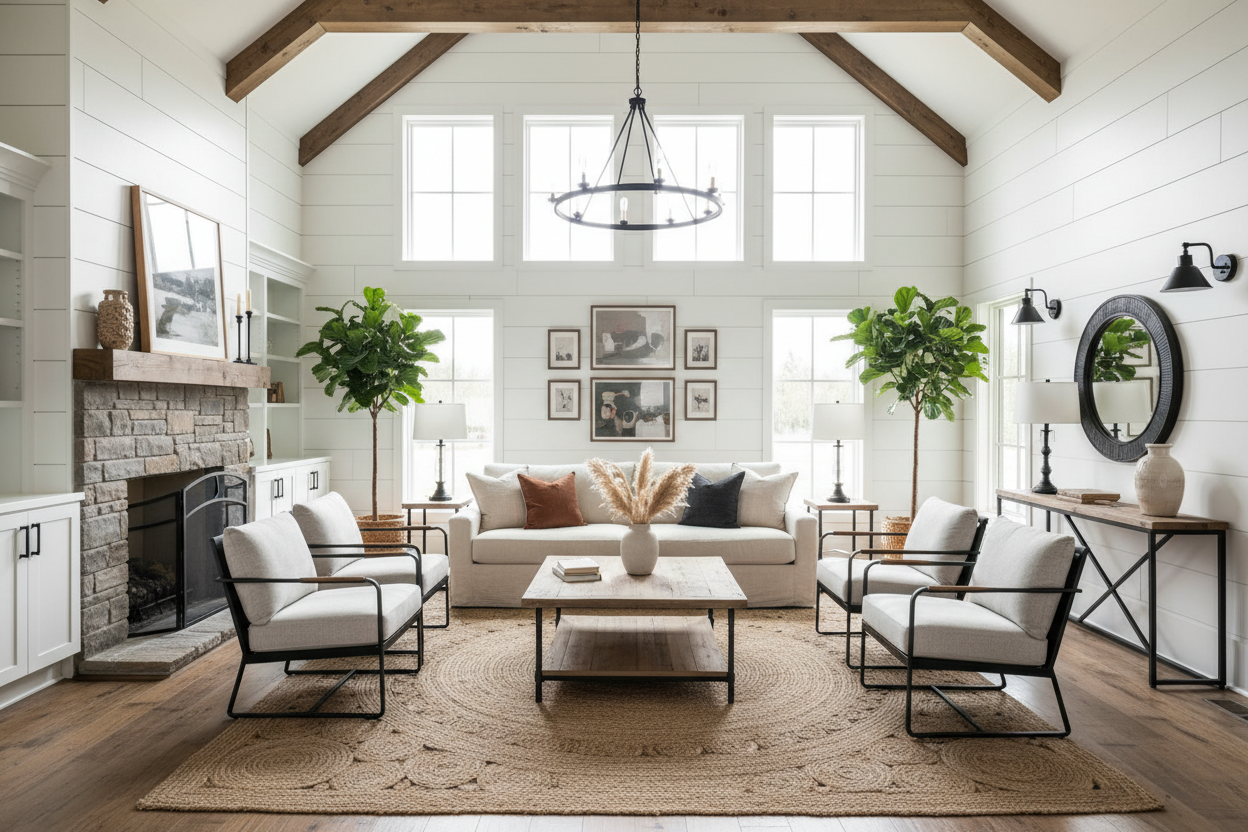
You've seen the look hundreds of times: white shiplap, a chunky wood dining table, black iron fixtures, a neutral linen sofa. Modern farmhouse has dominated home design for over a decade — and it's showing no signs of losing its grip on buyers.
There's a reason. The style hits a psychological sweet spot. It feels simultaneously cozy and clean, traditional and contemporary, aspirational without being intimidating. For agents and sellers, that makes it one of the safest, highest-impact staging choices available — regardless of whether your listing is a rural ranch, a suburban colonial, or a downtown townhouse.
What Makes Modern Farmhouse Different from Traditional Rustic
Traditional rustic staging leans heavy: raw wood everywhere, dark tones, rough textures that can feel dated or cramped in listing photos. Modern farmhouse strips that back. The key word is modern. You're keeping the warmth of farmhouse design — natural materials, handmade-looking accents, comfort-first furniture — but pairing it with crisp white walls, clean lines, and intentional negative space.
The result photographs beautifully. White and neutral tones bounce light around rooms, making them look larger in photos. Dark metal hardware and fixtures add definition without visual weight. Natural wood elements ground the space and add warmth that cold-modern interiors often lack.
The Signature Elements to Get Right
You don't need to tick every box, but these are the elements that read as modern farmhouse to buyers immediately:
- White or off-white walls — shiplap is iconic but not required; clean painted walls work just as well in photos
- Natural wood accents — a reclaimed wood coffee table, open floating shelves, or a farmhouse dining table anchors the warmth
- Black iron or matte black fixtures — pendants, cabinet hardware, curtain rods, and faucets all read farmhouse when finished in matte black
- Linen, cotton, and jute textiles — neutral fabrics with visible texture, never shiny or synthetic-looking
- Simple greenery — potted plants in terracotta or galvanized metal add life without looking fussy
- Exposed beams (if present) — don't hide them; they're an asset
Which Rooms Benefit Most
Modern farmhouse staging has the biggest impact in spaces where buyers spend the most emotional energy. The living room is where the style shines — a linen sofa, woven area rug, and wood accents tell an entire story in a single photo. The kitchen responds well to white cabinetry with black hardware and a simple wooden cutting board or bowl of produce on the counter. The master bedroom softens beautifully with layered neutral bedding and a reclaimed wood headboard or side tables.
Don't neglect entryways. A farmhouse-style bench, hooks, and a simple runner make a strong first impression that primes buyers for the entire showing.
Applying Modern Farmhouse Virtually — Without the Guesswork
The challenge with physical staging is that farmhouse pieces — especially authentic wood and quality linen — aren't cheap, and rentals often substitute lower-quality substitutes that don't photograph well. That's where virtual staging removes the friction entirely.
With Stagerify, you select a farmhouse or rustic style and generate a photorealistic interior in seconds. The AI places furniture, textiles, and accents that are proportionally correct for your specific room layout — no awkward scale issues, no pieces that clash. You get a polished farmhouse look in your listing photos without sourcing a single piece of furniture.
If your listing already has furniture that doesn't fit the look — dark heavy pieces, dated finishes, or eclectic clutter — use Stagerify's furniture removal first to clear the room, then stage virtually in the farmhouse style. The before-and-after difference is dramatic, and it takes minutes rather than days.
Matching the Style to the Property
Modern farmhouse works in more contexts than most agents realize. It's obviously at home in suburban single-family houses, but it adapts well to condos (lean into the clean, minimal side with a few wood accents), new construction (use it to add warmth to otherwise cold, builder-grade spaces), and even mid-century homes (the neutral palette complements MCM architecture without competing).
The one context where it needs adjustment: ultra-luxury properties. At the very high end, buyers often expect a more refined, tailored aesthetic — modern farmhouse can read as too casual. For luxury listings, consider transitional or contemporary staging instead, and use farmhouse elements only as subtle accents.
For everything else, modern farmhouse is a safe, strategic bet. It appeals broadly, photographs exceptionally well, and carries an emotional warmth that drives buyers to picture themselves at home — which is exactly what staging is designed to do.