
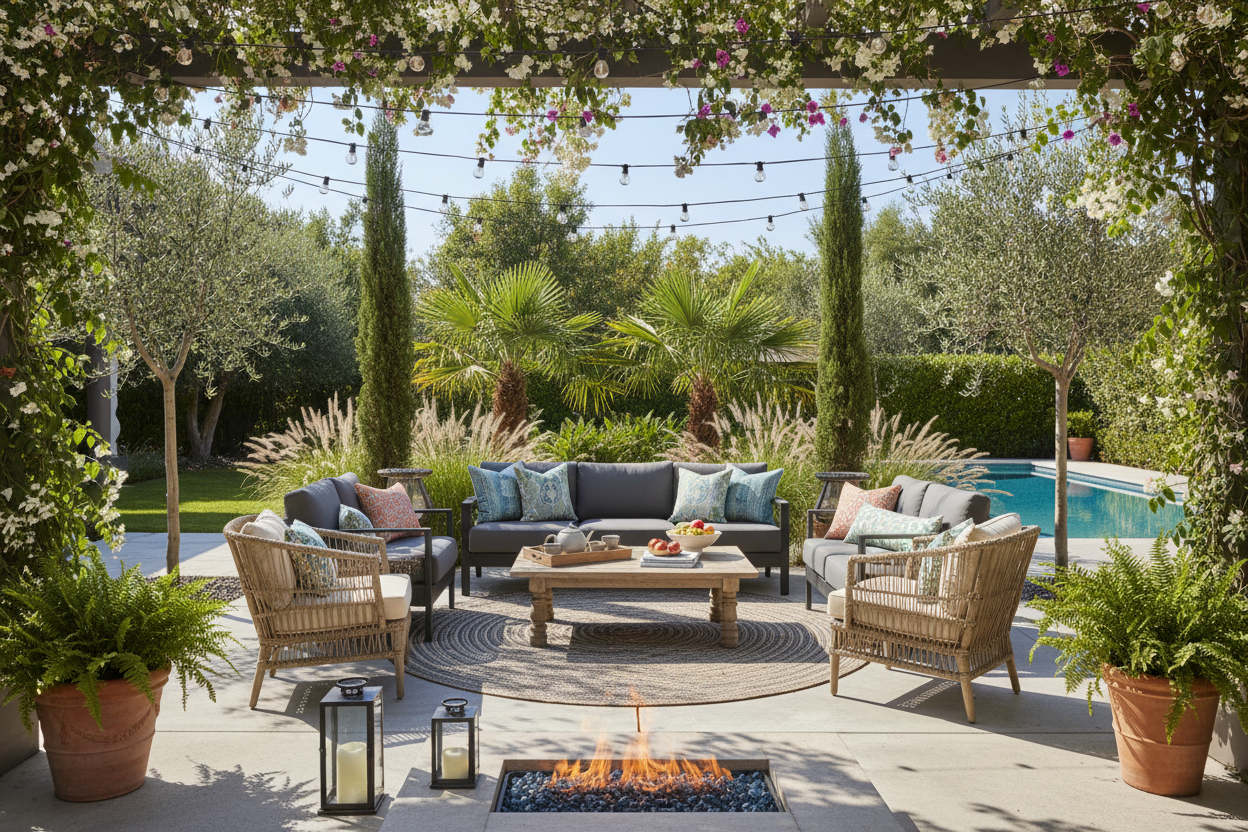
You've staged every room in the house. The living room looks magazine-worthy. The master bedroom feels like a boutique hotel. But then buyers scroll to the patio photo — a concrete slab, a rusting grill, and a lawn chair that's seen better days — and the whole impression falls apart.
Outdoor spaces are the most common staging blind spot in real estate. Agents spend hours perfecting interior photos but treat the backyard as an afterthought. That's a mistake. Studies consistently show that outdoor living areas rank among buyers' top priorities — especially post-2020, when outdoor space became synonymous with lifestyle and freedom.
Why Outdoor Staging Matters More Than You Think
Buyers aren't just buying square footage — they're buying a vision of their life. A well-staged outdoor space sells a weekend morning with coffee, a summer dinner with friends, a kid's birthday in the backyard. An unstaged one sells nothing. It makes buyers do mental work they don't want to do, and most of them won't bother.
Even a small patio — 8 by 10 feet — can be transformed into a compelling lifestyle moment with the right staging approach. The goal is never to make the space look bigger than it is. The goal is to make it look livable.
The Four Elements of Outdoor Staging That Actually Work
Great outdoor staging follows the same principles as indoor staging: define the space, create a focal point, suggest a use case, and eliminate distractions. Here's what that looks like in practice:
- Define zones clearly. Even a compact patio benefits from a "dining zone" and a "lounge zone." Two chairs and a small table in one corner, a rug under them if the surface allows — buyers immediately understand how they'd use the space.
- Add soft elements. Outdoor cushions, a throw blanket, a potted plant — these introduce warmth and make a hard outdoor environment feel welcoming. They also photograph beautifully.
- Control the focal point. What's the first thing the eye goes to in your outdoor photo? If it's a chain-link fence or an HVAC unit, you have a problem. Use furniture arrangement, planters, or string lights to redirect attention toward the best part of the space.
- Shoot at the right time. Golden hour (one hour after sunrise or before sunset) transforms an ordinary backyard into something cinematic. Harsh midday sun flattens everything and creates ugly shadows. If you can't shoot at golden hour, overcast light is your second-best option.
What to Do When the Space Is Too Far Gone
Sometimes the outdoor space can't be physically staged — the property is vacant, you can't access it easily, or the patio itself is genuinely unappealing (cracked concrete, overgrown shrubs, dated furniture that would cost more to replace than it's worth).
This is exactly where virtual staging earns its keep outdoors. With Stagerify, you can upload a raw photo of any outdoor space and digitally furnish it with a curated seating arrangement, planters, ambient lighting, and more — all while keeping the architecture and surroundings authentic. Buyers see the potential without having to imagine it themselves.
The furniture removal feature also lets you clear out existing eyesores — an old shed, a dated swing set, an ugly umbrella — before layering in clean, modern staging. The result looks like a professional photoshoot of the space at its absolute best.
Matching Your Outdoor Style to the Property and Buyer
A beach cottage and a minimalist urban townhouse shouldn't have the same outdoor staging. Matching the style to the property and its likely buyer demographic amplifies the emotional resonance of the photos:
- Modern / Contemporary: Clean lines, neutral tones, simple planters, minimal accessories. Think black-frame chairs and a concrete-look table.
- Coastal: Natural textures (rattan, teak, wicker), breezy white and navy tones, oversized umbrella, casual rope details.
- Traditional / Family: Comfortable sectional, warm wood tones, a fire pit or outdoor heater, layered textiles.
- Urban Condo Balcony: Compact bistro set, vertical garden, string lights — emphasize that even a small balcony is a private outdoor escape.
The Photo That Sells the Outdoor Space
Even with great staging, a bad photo undoes everything. For outdoor spaces, shoot from a corner of the space looking diagonally across it — this maximizes the apparent size and shows the depth of the area. Include a slice of the sky if the weather is appealing. Avoid straight-on shots of walls or fences; they compress the space and emphasize boundaries instead of the openness buyers are looking for.
If the backyard is a genuine selling feature — large lot, pool, mature trees — lead with it. Use one of the first three listing photos for outdoor content. Most agents bury the outdoor photos at the end, but buyers who care about outdoor space are looking for those images immediately and will skip a listing entirely if they can't find them.
Your indoor staging may be flawless. Don't let a bare patio be the reason a buyer moves on.