
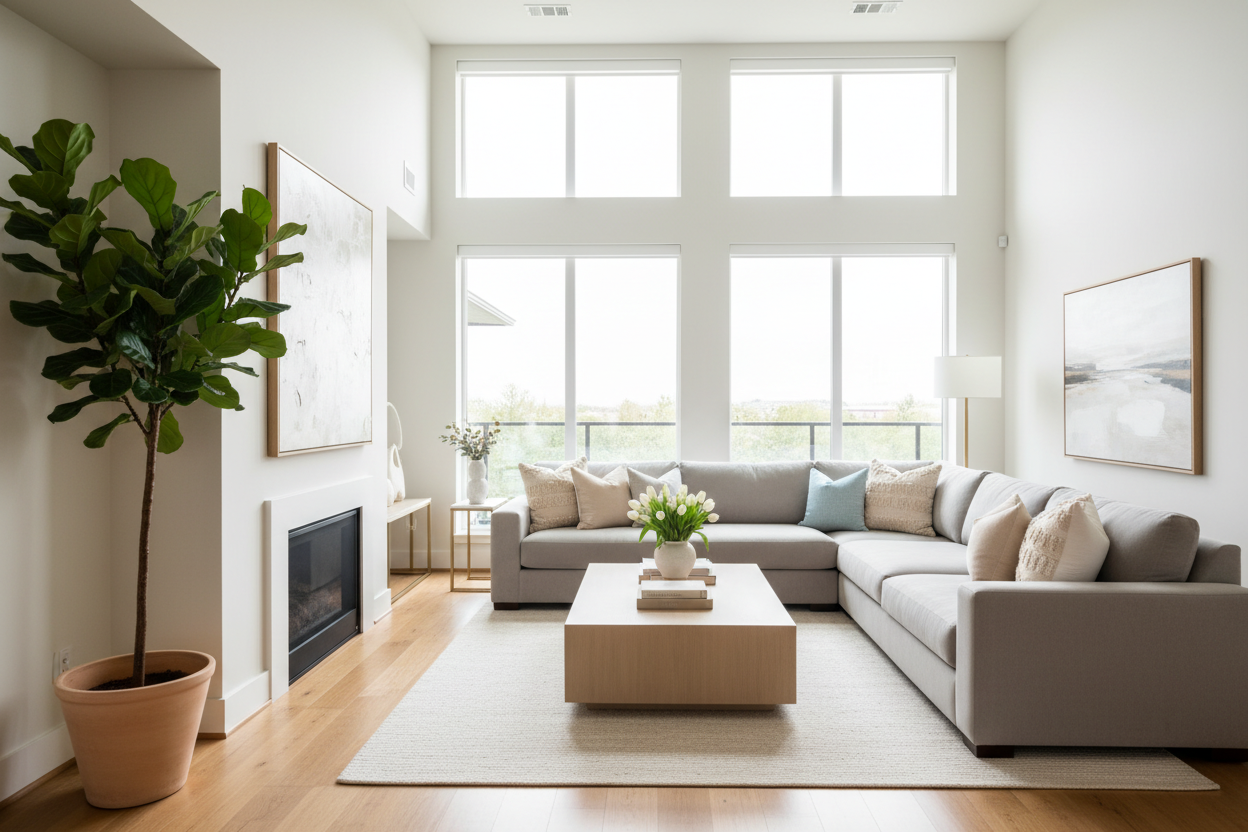
A stager shows up with a truck full of furniture. Or you upload a photo and get a fully staged room back in seconds. Both approaches produce a property that photographs beautifully — but the comparison ends there. The cost structure, timeline, flexibility, and best-fit scenarios are completely different. Here's what you actually need to know before committing to either.
The Cost Gap Is Bigger Than Most Agents Realize
Physical staging for a vacant home typically runs $1,500–$5,000 for the first month, plus monthly rental fees if the property sits on the market. A full house — three to four rooms — can easily hit $3,000 to $8,000 when you factor in delivery, setup, and pickup. For luxury listings, costs can climb above $10,000.
Virtual staging costs a fraction of that. With a platform like Stagerify, you're typically paying a few dollars per image — not per month. There's no rental clock ticking, no logistics to coordinate, and no pickup fee when the property closes. For agents who list multiple properties a month, the cumulative savings are substantial.
The math is simple: if virtual staging produces photos compelling enough to attract buyers online — where over 95% of home searches begin — the physical version offers diminishing returns for its premium price tag.
Speed: Days vs. Seconds
Physical staging requires scheduling, availability, and a minimum lead time of several days. Stagers are often booked out a week or more, especially in competitive markets during peak season. If you want to list quickly after a price reduction or respond to market momentum, you may simply not be able to get a stager in time.
Virtual staging removes that constraint entirely. Upload your photos, choose a style, and your results are ready in under a minute. Need to re-stage after buyer feedback? Change the style before a second shoot? Update photos after a price drop? With virtual staging, any of those takes seconds — not a scheduling call and another $500 setup fee.
Where Physical Staging Still Has the Edge
Physical staging isn't obsolete. For properties where in-person showings are driving offers — particularly in high-traffic markets where buyers walk every room before deciding — the tactile experience of a beautifully furnished space still carries weight. A buyer sitting on the couch, imagining Sunday mornings in that living room, is a different experience than browsing photos online.
Physical staging also makes sense when:
- The property is in a luxury tier where presentation expectations are extreme
- The listing is in a high-foot-traffic building or community with frequent walk-ins
- The seller is hosting multiple open houses over an extended campaign
- The architectural details of the space are best appreciated in person
Even in these cases, many agents use virtual staging to produce the listing photos — which are what most buyers see first — and add physical staging only for showings. That hybrid approach captures the best of both: professional online presentation at a low per-photo cost, plus an elevated in-person experience for serious buyers.
The Flexibility Advantage Virtual Staging Gives You
Physical staging locks you into one look. If buyers aren't responding, changing the furniture arrangement or swapping the style means bringing the stager back out — another fee, another scheduling window.
Virtual staging is infinitely adjustable. With Stagerify, you can test a modern look on Monday and a coastal look on Wednesday. You can stage the same room in three different styles and A/B test which performs better with your target buyer demographic. You can pull dated furniture from a seller's occupied home and replace it with clean contemporary pieces — without touching a single chair in real life.
That flexibility changes how you think about listing strategy. Instead of committing to one style and hoping it resonates, you can iterate until you find what works.
Side-by-Side: Which Wins for Each Scenario?
| Scenario | Virtual | Physical |
|---|---|---|
| Vacant property listing photos | ✓ Best fit | Works, but costly |
| Occupied home — seller's furniture is dated | ✓ Best fit | Not applicable |
| Luxury listing, weekly open houses | For online photos | ✓ Add for showings |
| Quick turnaround / price reduction refresh | ✓ Best fit | Too slow |
| Multiple listings per month (agent workflow) | ✓ Best fit | Budget prohibitive |
| Pre-construction / renders needed | ✓ Best fit | Not possible |
The Verdict
For the vast majority of listings, virtual staging is the smarter default. It's faster, cheaper, more flexible, and produces results that photograph as well as — and often better than — physical staging. The photos buyers see on Zillow and Realtor.com don't come with a "staged virtually" disclaimer that changes how they feel about the space.
Reserve physical staging for properties where in-person presentation is genuinely driving the offer decision: high-end listings with active foot traffic, luxury condos with concierge service, or properties where the seller has specifically budgeted for a premium in-person experience. For everything else, tools like Stagerify give you professional-grade results at a fraction of the cost — without a truck, a scheduler, or a monthly rental fee.